Daylight Saving Time 2026: The House Voted to Make It Permanent — Here's Where It Stands
The House passed the Sunshine Protection Act on July 14, 2026, but the Senate hasn't voted. A plain-language update on the 2026 daylight saving bill, the three competing proposals, and what happens next.
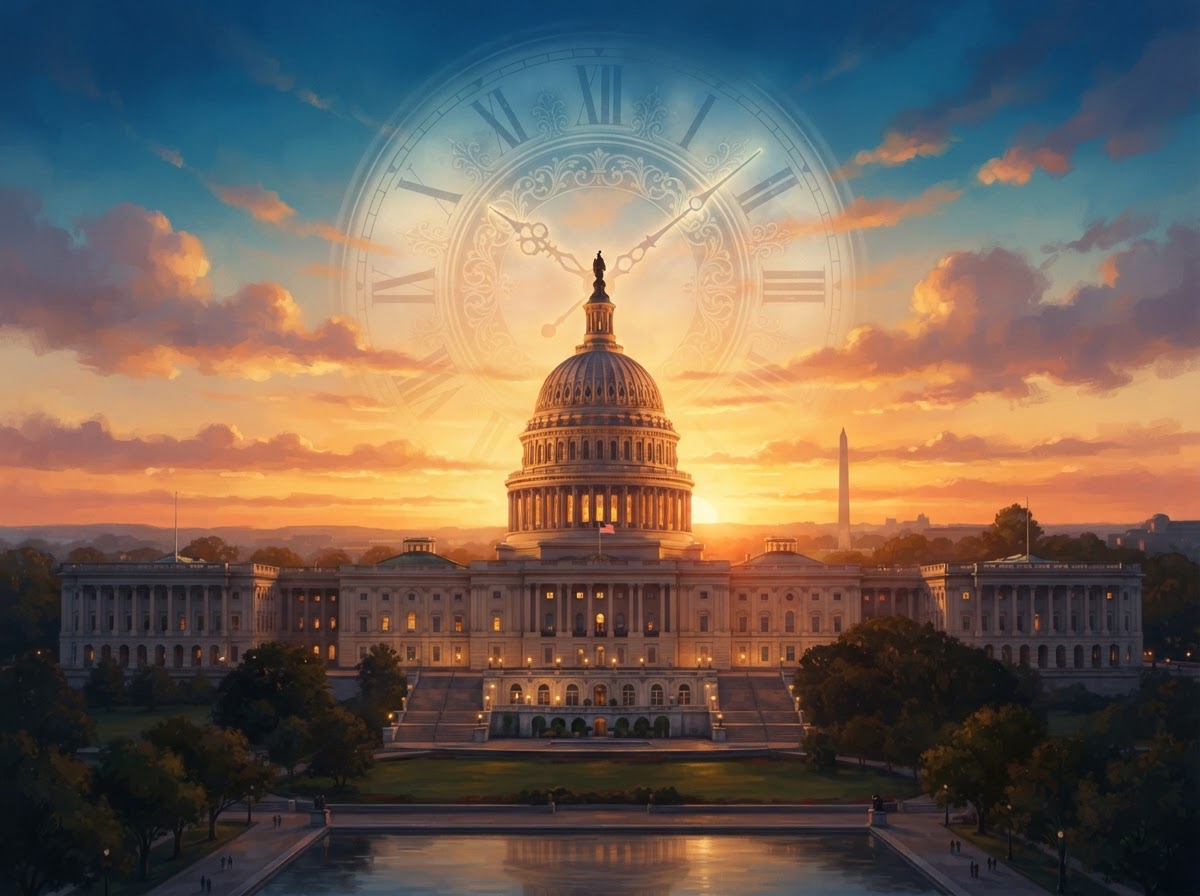
The push to stop changing the clocks twice a year took its biggest step forward in a decade during 2026. On July 14, 2026, the US House of Representatives passed the Sunshine Protection Act (H.R. 139) on a bipartisan 309–117 vote, with the backing of President Donald Trump. The bill would make Daylight Saving Time permanent nationwide — but it has not become law, and the twice-yearly time change continues for now.
What the House passed in July 2026
H.R. 139 would advance standard time by one hour and lock it in year-round, effectively making Daylight Saving Time permanent. States that currently stay on permanent standard time — most of Arizona, Hawaii, and several US territories — would keep that option. The House vote was the first time a permanent-DST bill cleared either chamber since the Senate's unanimous 2022 vote on an earlier version, which later expired without House action.
Why the Senate hasn't voted
After the House vote, the bill moved to the Senate and was referred to the Committee on Commerce, Science, and Transportation. No floor vote was scheduled. In October 2026, Senate Majority Leader John Thune said there was 'no clear path forward,' and the Senate adjourned without taking it up before the November 1, 2026 time change. For the bill to become law, the Senate would still need to pass it and the President would need to sign it.
The House passed permanent daylight saving time in July 2026, but the Senate never scheduled a vote — so for now, Americans still fall back and spring forward.
Three competing proposals in 2026
Congress didn't just debate one idea. The 119th Congress considered at least three distinct approaches to the clock change:
- Permanent DST (H.R. 139, the Sunshine Protection Act) — keep clocks one hour ahead year-round; passed the House July 14, 2026.
- Permanent standard time (H.R. 9638, the bipartisan 'Sunshine for Our Kids Act') — repeal DST and stay on standard time year-round; introduced July 2026, stuck in committee.
- 'Half-daylight saving time' (H.R. 7378, the Daylight Act of 2026) — end the twice-yearly change by advancing standard time just 30 minutes; introduced February 2026, stuck in committee.
All three were referred to the House Committee on Energy and Commerce; only H.R. 139 reached a floor vote. The split reflects the real disagreement in Congress: not whether to stop changing the clocks, but which clock to keep.
States are ready, but need Congress first
Nineteen states have already enacted laws to adopt permanent DST the moment federal law allows it — among them Florida, Washington, Colorado, Tennessee, Alabama, and Oregon. Under the Uniform Time Act of 1966, states can opt out of DST (as Arizona and Hawaii do) but cannot adopt permanent DST on their own, so those state laws are on hold until Congress acts. In March 2026, Canada's province of British Columbia went ahead and adopted permanent year-round DST, giving the movement a boost just across the border.
What happens next
The 2026 House passage is real progress for permanent-DST supporters, but it is not the finish line. Until the Senate votes and the President signs a bill, the existing March-to-November schedule stays in force. For 2027, that means springing forward on Sunday, March 14, 2027 and falling back on Sunday, November 7, 2027. Watch this space — we update the countdown and the policy tracker as the bill moves.
Keep track of the next time change
Watch the clock count down to the next Daylight Saving Time transition in real time.